 By James Purse, Director at Project7 · Last reviewed 13 November 2026 · 3 minute read
Short answer. Shift 5 asks the team to balance Lean Simulator’s line by moving work away from the bottleneck station. One station has more work than the others, so it sets the pace for the whole line. Rebalancing evens out the work so nobody waits and nobody is overloaded.
Key facts
- Focus: the bottleneck station.
- Change: work redistributed across stations.
- Effect: waiting evens out.
What changes on the line
- The team moves tasks from the busiest station to its neighbours.
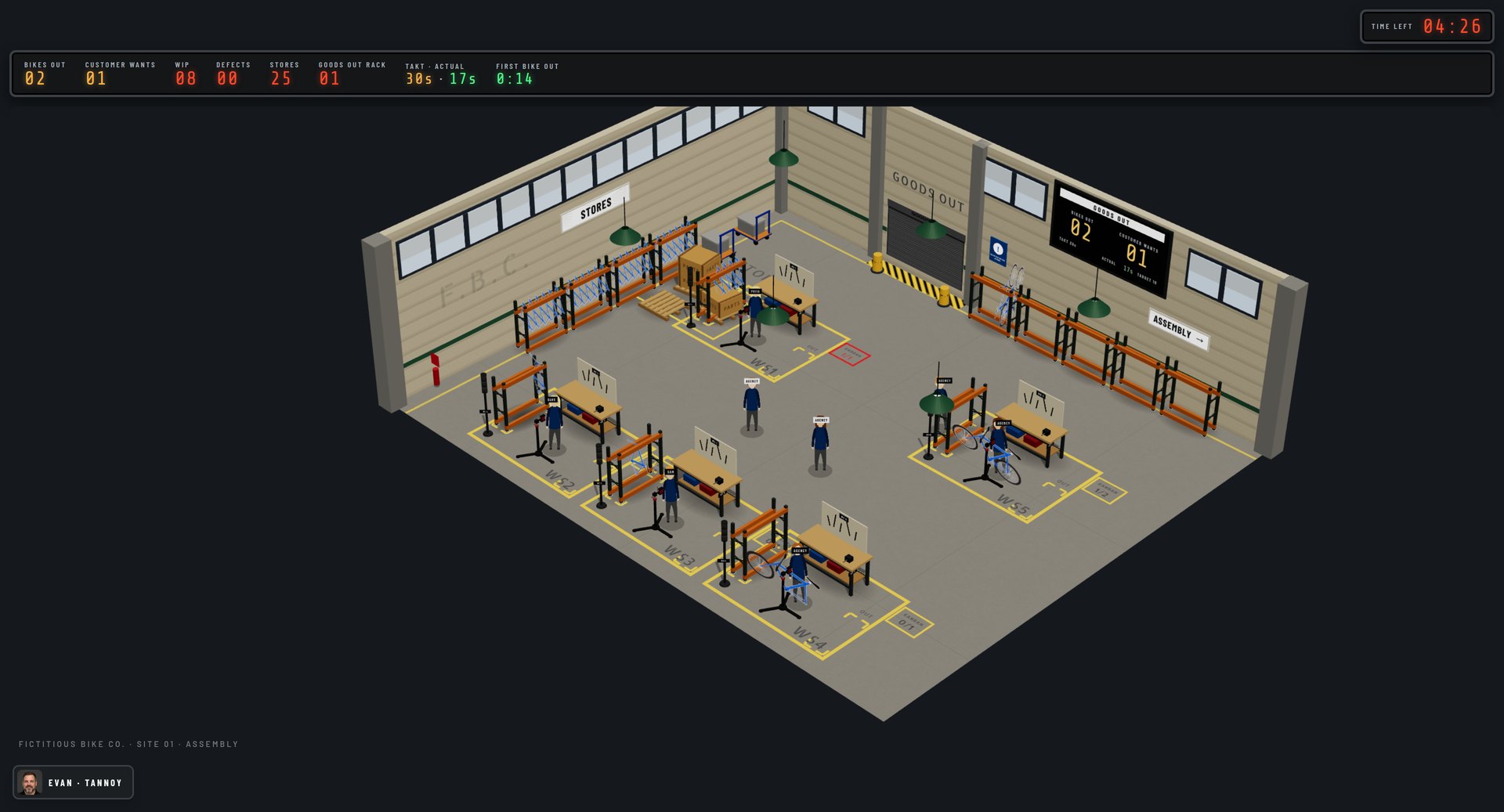
The Lean idea: line balancing
A line can only go as fast as its slowest step. Speeding up any other step just builds a queue in front of the bottleneck.
Balancing spreads the work so each station takes about the same time. The line’s output rises without anyone working harder.
What to watch for
- Waiting time evening out across stations.
- The queue in front of the old bottleneck disappearing.
Debrief questions
- Who was waiting, and who was overloaded?
- How did you decide what to move?
- Where is the bottleneck in your own process?
For the full debrief method, see How to debrief a Lean simulation.
Facilitator tips
- Ask the team to find the bottleneck before revealing it.
- Point out that output rose without anyone going faster.
Frequently asked questions
Line balancing distributes the work across the steps of a process so each takes about the same time, removing the bottleneck that limits output.
Look for where work queues. The step with the longest queue in front of it, and idle steps after it, is usually the bottleneck.
Try it before you run it
Work one shift on the line with Evan guiding you. It needs only your email address: no card and no contract.
Related guides
- Shift 4: One-Piece Flow and Quality at Source
- Shift 6: Takt and Levelled Scheduling
- The six-shift journey
- How to debrief a Lean simulation
About the author
James Purse is a Director at Project7, a UK operational transformation consultancy whose approach is grounded in Toyota thinking, and has nearly 20 years of practitioner experience in Lean, leadership and performance improvement. He works with manufacturing, engineering and infrastructure organisations to find what is really limiting performance and to fix it alongside their own teams. James Purse on LinkedIn