 By James Purse, Director at Project7 · Last reviewed 13 November 2026 · 3 minute read
Short answer. Shift 4 moves Lean Simulator’s line to one-piece flow and quality at source: the batch drops to one, the kanban to one, and the inspector role disappears because assemblers check their own work. The red-tagged frame now reaches the customer much sooner, and defects are caught where they are made.
Key facts
- Batch size: one.
- Kanban: one.
- Inspection: by each assembler, at source.
- Roles: the inspector role is removed.
What changes on the line
- Bikes move one at a time.
- Each square holds a single bike.
- Assemblers check quality themselves; there is no inspector.
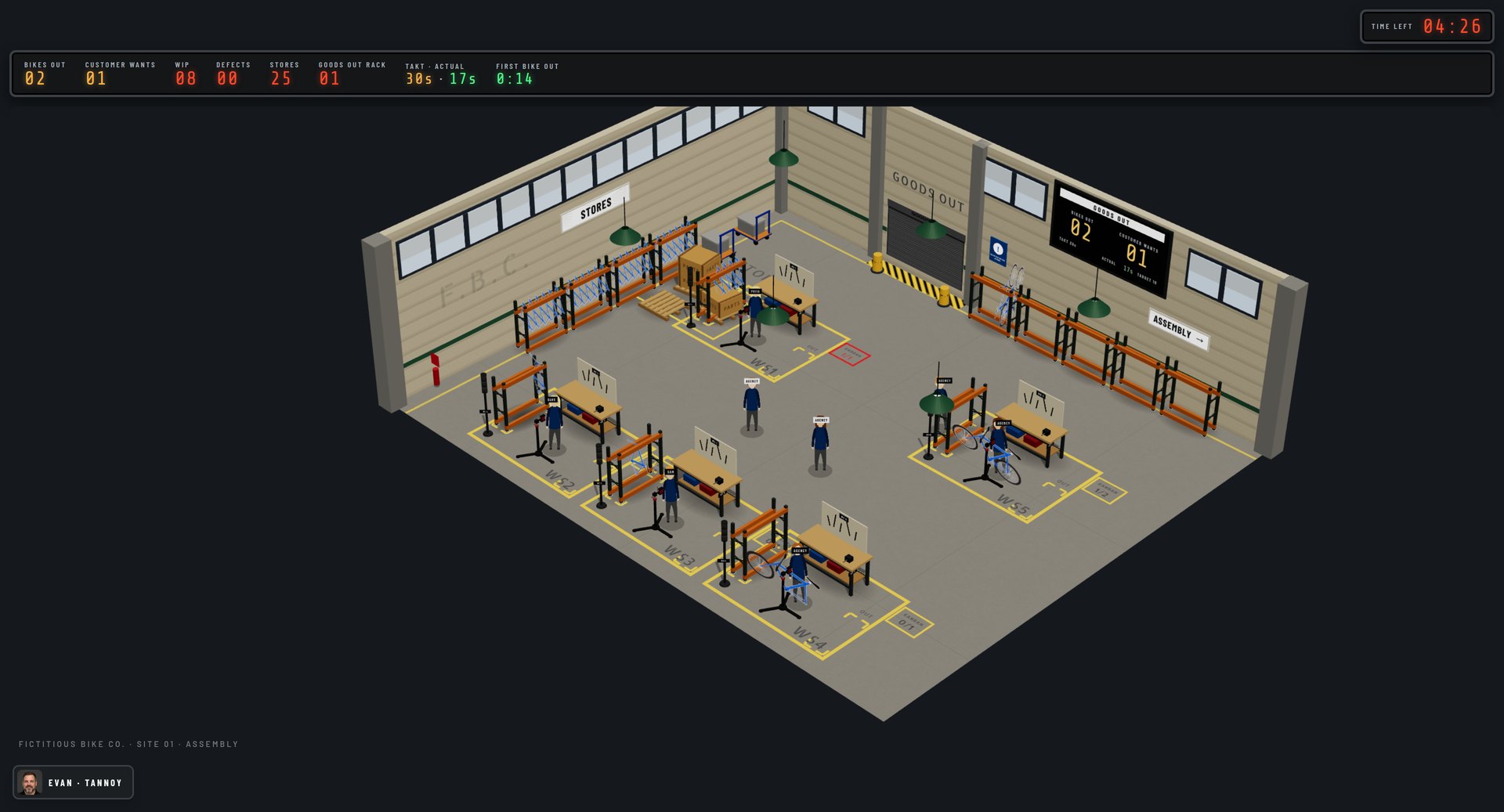
The Lean idea: one-piece flow and building quality in
With a batch of one, a bike moves on as soon as its step is done, so lead time drops to little more than the work itself.
Checking your own work catches a fault at the moment it is made, before more is built on top of it. Inspecting at the end only finds the fault after the cost is sunk.
What to watch for
- The tagged frame’s lead time compared with earlier shifts.
- Rework falling once faults are caught at source.
- Which station still holds others up.
Debrief questions
- What happened to lead time?
- What changed when you checked your own work?
- Where did the inspector’s effort go?
For the full debrief method, see How to debrief a Lean simulation.
Facilitator tips
- Compare the tagged frame’s lead time with Shift 1 on screen.
- Ask the former inspector how the line feels now.
Frequently asked questions
One-piece flow means moving items through a process one at a time rather than in batches, so each moves on as soon as it is ready.
Quality at source means the person doing the work checks it as they go, so faults are caught where they are made rather than at final inspection.
Try it before you run it
Work one shift on the line with Evan guiding you. It needs only your email address: no card and no contract.
Related guides
- Shift 3: Pull with Kanban
- Shift 5: Balance the Line
- The six-shift journey
- How to debrief a Lean simulation
About the author
James Purse is a Director at Project7, a UK operational transformation consultancy whose approach is grounded in Toyota thinking, and has nearly 20 years of practitioner experience in Lean, leadership and performance improvement. He works with manufacturing, engineering and infrastructure organisations to find what is really limiting performance and to fix it alongside their own teams. James Purse on LinkedIn