 By James Purse, Director at Project7 · Last reviewed 13 November 2026 · 3 minute read
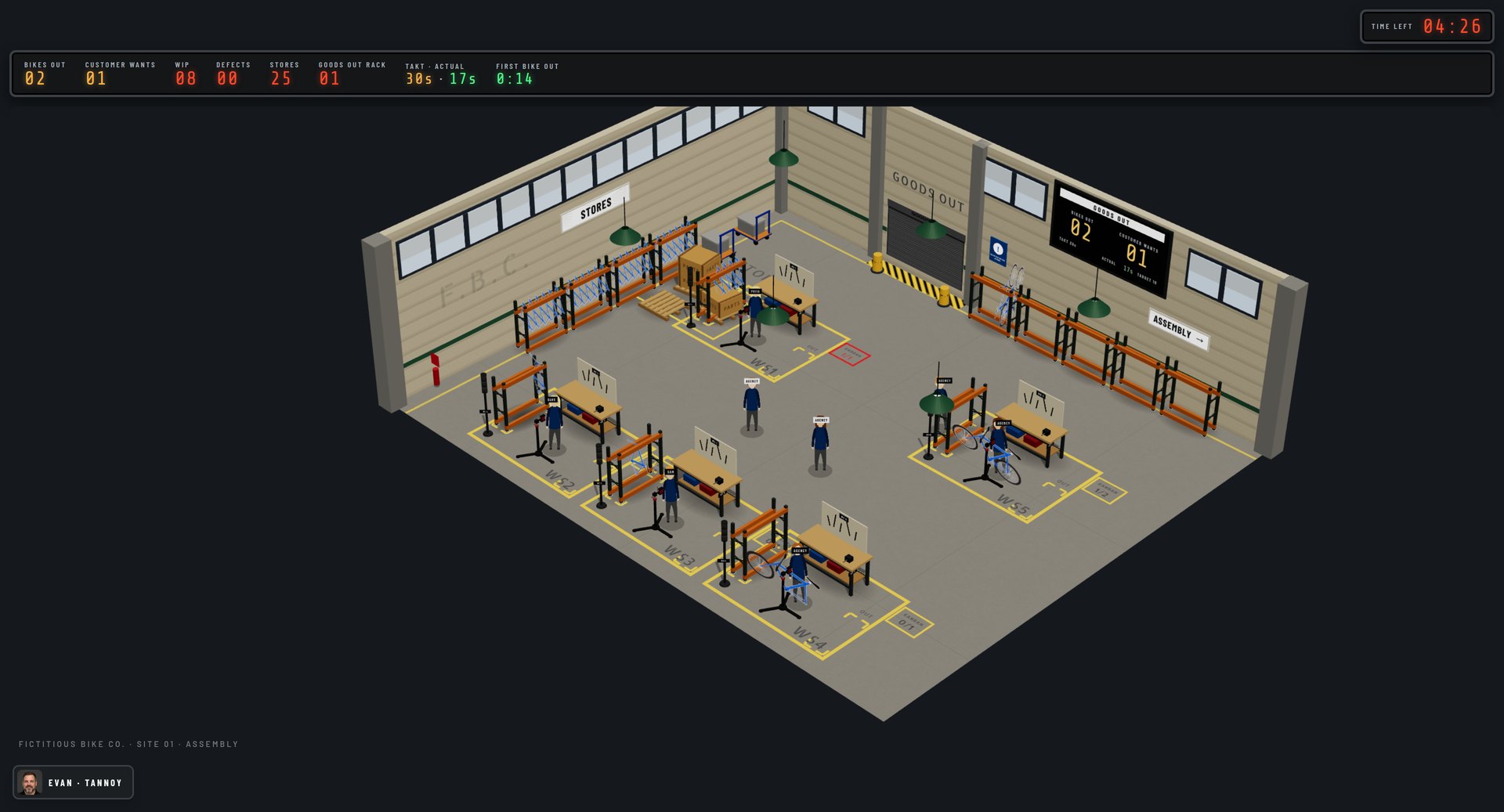
Short answer. Shift 1 is Lean Simulator’s starting point: a push-and-batch line designed to be full of waste. Stations are spread out, stores sit behind a wall, parts move in batches of six, assemblers cannot move parts or check their own work, and an inspector checks bikes at the end. It should feel slow and frustrating, because that is the lesson.
Key facts
- Layout: stations spread out over 390 m².
- Batch size: six.
- Stores: behind a wall and down a corridor.
- Quality: inspected at the end of the line.
- Typical result: at a standard pace the shift makes a loss of around 60 to 85.
What changes on the line
- Five workstations scattered across the floor.
- Parts issued in batches of six by a storesperson who cannot see the line.
- Material handlers carry everything; assemblers are not allowed to move parts.
- An inspector checks finished bikes and sends faults back.
The Lean idea: what push and batch costs you
A push system builds to a plan or to keep people busy, not to what the customer needs next. Combined with large batches, it fills the line with half-built product.
Every batch of six has to be finished before any of it moves on, so the first bike waits for five others at every station. Stock piles up, defects are found late, and the customer waits.
What to watch for
- Work in progress building up between stations.
- Handlers walking constantly while assemblers wait.
- The red-tagged frame taking a long time to reach Goods Out.
- Bikes coming back from inspection for rework.
Debrief questions
- Where did you wait, and what for?
- Where did half-built bikes pile up?
- How long did the customer wait for the first bike?
- Where have you seen this in your own workplace?
For the full debrief method, see How to debrief a Lean simulation.
Facilitator tips
- Do not rescue the shift. Let the frustration build.
- Ask each role what was hardest; each will describe a different waste.
- Lead the debrief with work in progress and first delivery, not bikes made.
Frequently asked questions
A push system releases work to a plan or to keep people busy, regardless of whether the next step or the customer needs it. It tends to build up work in progress.
It is designed that way: spread-out stations, distant stores, batches of six and end-of-line inspection create the waste the rest of the journey removes.
Try it before you run it
Work one shift on the line with Evan guiding you. It needs only your email address: no card and no contract.
Related guides
- Shift 0: the induction
- Shift 2: Layout and Flow
- The six-shift journey
- How to debrief a Lean simulation
About the author
James Purse is a Director at Project7, a UK operational transformation consultancy whose approach is grounded in Toyota thinking, and has nearly 20 years of practitioner experience in Lean, leadership and performance improvement. He works with manufacturing, engineering and infrastructure organisations to find what is really limiting performance and to fix it alongside their own teams. James Purse on LinkedIn