 By James Purse, Director at Project7 · Last reviewed 13 November 2026 · 3 minute read
Short answer. Shift 6 drops customer demand by 40% and asks the team to rebalance Lean Simulator’s line to three operators, working to takt time with a levelled schedule. Output per person holds up with fewer people, and the people freed can be redeployed to improvement work.
Key facts
- Demand: down 40%.
- Operators: three.
- Layout: a cell of three, 179 m².
- Pace: set by takt time.
What changes on the line
- Customer demand falls by 40%.
- Work is rebalanced across three operators.
- The schedule is levelled to an even pace.
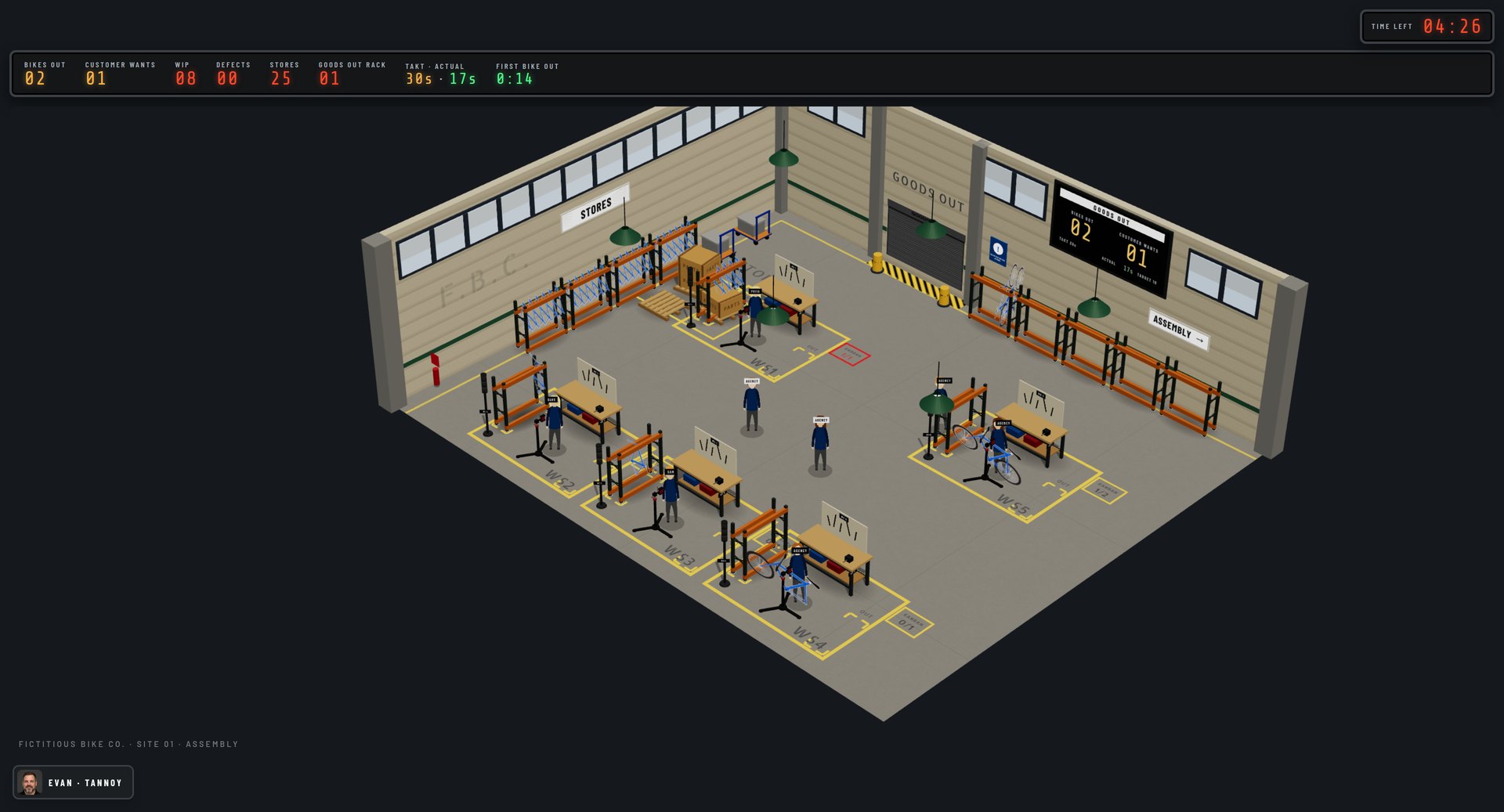
The Lean idea: takt time and levelled scheduling
Takt time is the pace the customer sets: the time available divided by the number of units needed. Working to takt means building exactly as fast as demand, no faster.
When demand drops, a Lean line rebalances to fewer people rather than building stock nobody ordered. Levelling the schedule keeps the pace steady, and the people freed are redeployed rather than left waiting.
What to watch for
- Output per person staying level with fewer operators.
- No stock building up ahead of demand.
- The smaller cell using less floor space.
Debrief questions
- How did three people keep up with demand?
- What would have happened if you kept everyone building?
- Where would you redeploy the people freed up?
For the full debrief method, see How to debrief a Lean simulation.
Facilitator tips
- Contrast with the build-ahead trap: building stock nobody ordered turns profit into loss.
- End the journey by asking each person for one change they will look for at work.
Frequently asked questions
Takt time is the available working time divided by customer demand. It is the pace at which one unit must be finished to meet demand exactly.
Levelled scheduling evens out production over time, so the line works at a steady pace instead of swinging between rushes and idle periods.
Try it before you run it
Work one shift on the line with Evan guiding you. It needs only your email address: no card and no contract.
Related guides
About the author
James Purse is a Director at Project7, a UK operational transformation consultancy whose approach is grounded in Toyota thinking, and has nearly 20 years of practitioner experience in Lean, leadership and performance improvement. He works with manufacturing, engineering and infrastructure organisations to find what is really limiting performance and to fix it alongside their own teams. James Purse on LinkedIn