 By James Purse, Director at Project7 · Last reviewed 13 November 2026 · 3 minute read
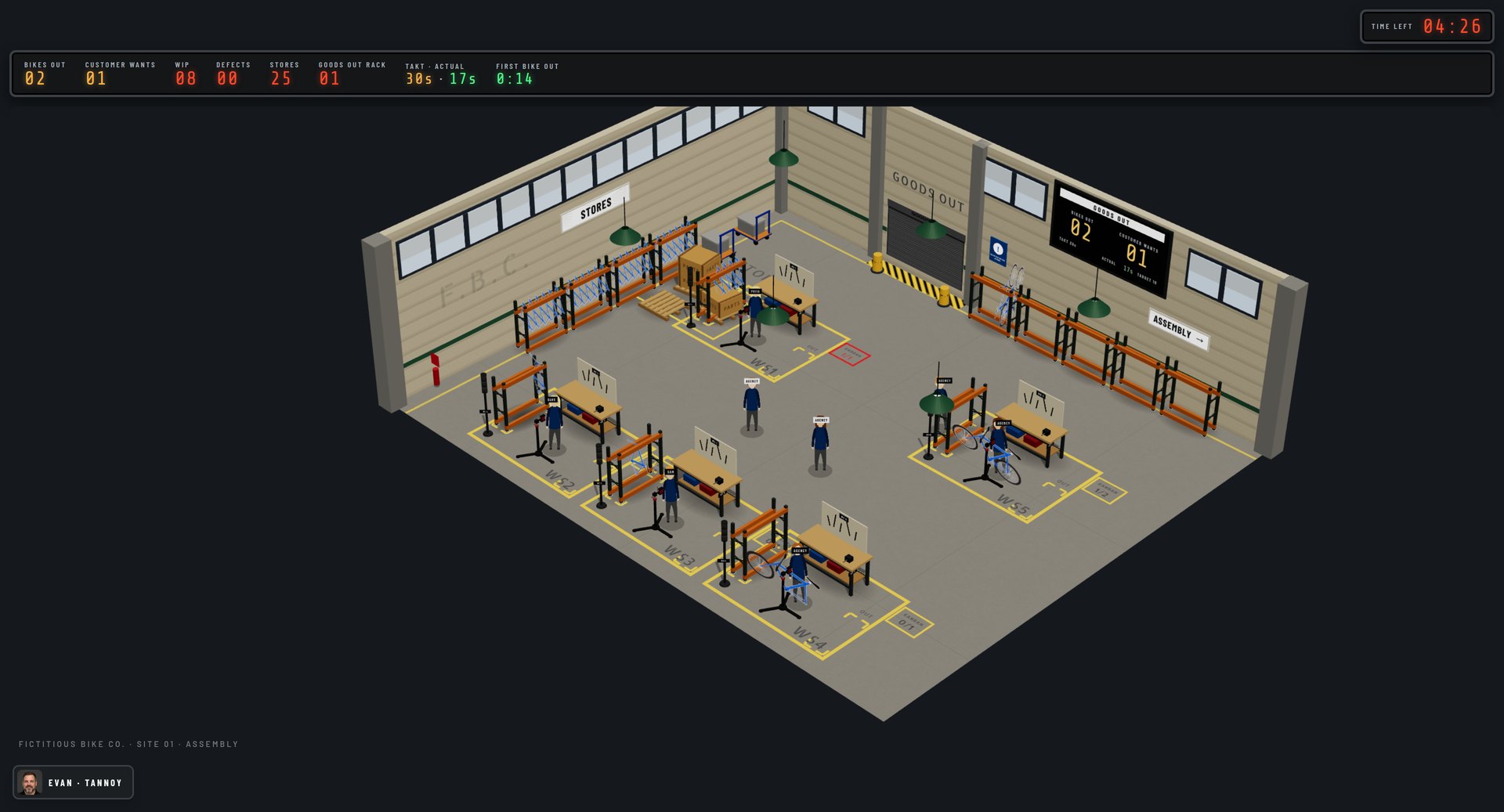
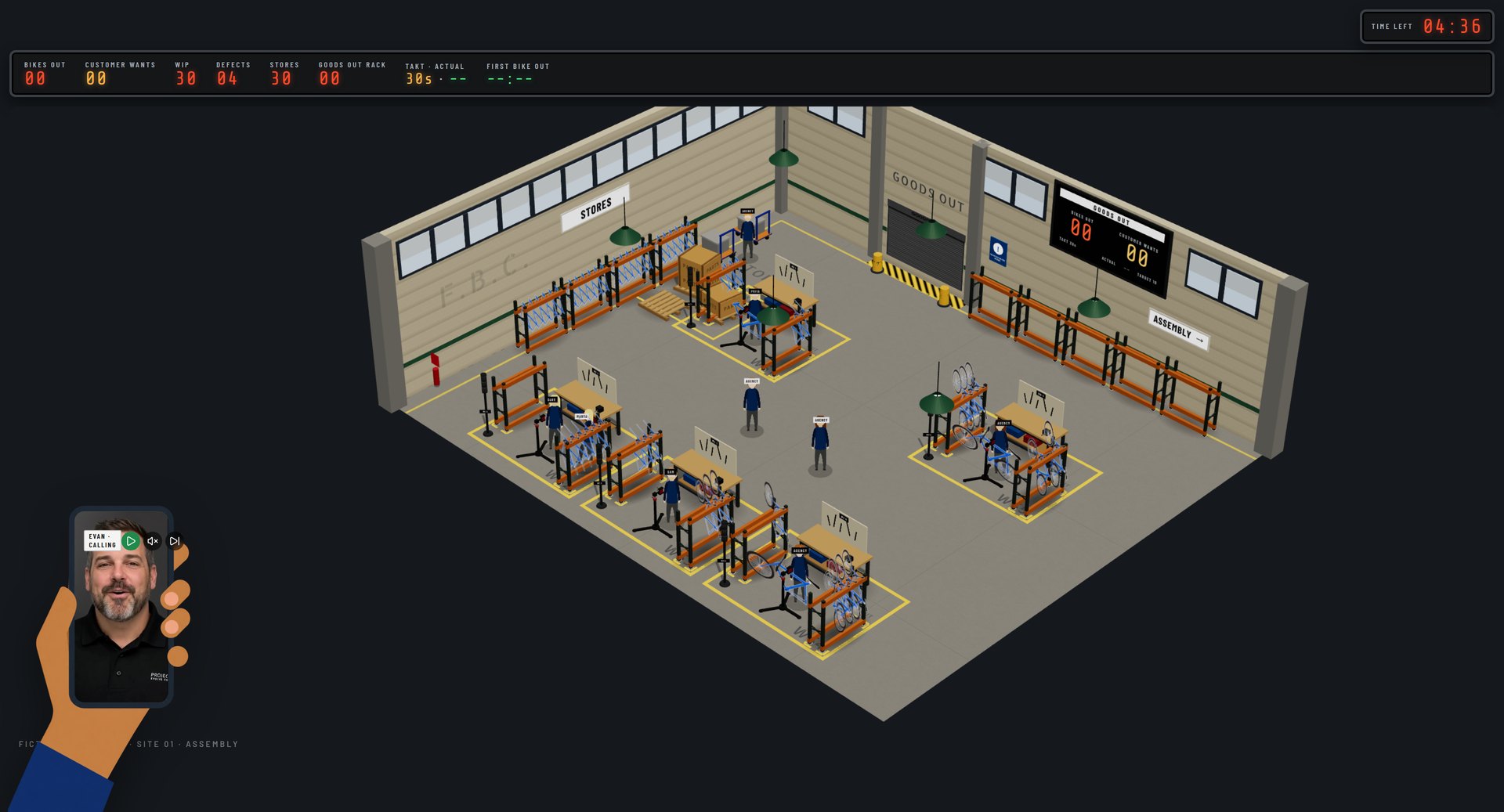
Short answer. Lean Simulator is a multiplayer, browser-based Lean manufacturing training simulation from The Immersive Learning Studio. A team takes roles on a virtual bicycle assembly line, runs it the wasteful way, then improves it shift by shift. Evan, a built-in facilitator, guides every learner from the first screen to the final debrief.
Key facts
- What you do: build bikes as a team at The Fictitious Bike Co., then redesign the line using Lean.
- Format: a six-shift journey, plus two shorter two-shift journeys for a single idea.
- Players: four to eight per game is ideal; the simulation works any role nobody takes.
- Where: in a web browser on each person’s own device, in the same room or fully remote.
- Facilitation: built in. Evan briefs, coaches and debriefs; a human facilitator can add to it or take over.
- Cost to try: one free shift with your email address, no card.
How it works
A host opens a game and shares a five-digit game code. Players join with the code, take a role on the line and start with a short induction. Then the shifts begin. Each shift runs for about ten minutes and changes one thing about how the line works, so the team can see exactly what that change did.
Shift 1 is deliberately badly designed: stations spread out, stores far away, big batches and an inspector at the end. From there the team applies Lean one lever at a time, finishing with takt time and a levelled schedule. The full sequence is described in The six-shift journey.
What it teaches
The journey covers six named Lean levers:
- Layout design
- Pull versus push
- One-piece flow versus batching
- Building quality in versus inspecting it out
- Line balancing
- Establishing standards, including takt time and levelled scheduling
These are the same ideas taught in the classic table-top Lego just-in-time game, delivered on screen so nobody needs a kit, a large room or a projector.
What makes it different
- A facilitator in the product. Evan runs briefings, coaching and debriefs, so a single learner or a trainer new to Lean can run a full session.
- Decisions with consequences. Between shifts the team picks its next change from three cards. Pick the trap and the line shows you what happens.
- Money on the scoreboard. Every shift ends with sales, costs and a profit or loss, alongside work in progress and lead time. See Reading the results: WIP, lead time and profit.
- Built for training providers. A partner licence covers your facilitators, with unlimited games and players who join free with a game code.
Who it is for
- Lean training companies and consultancies who run workshops with their own clients.
- In-house continuous improvement teams introducing Lean to operators, team leaders and managers.
- Individual learners who want to experience Lean before applying it, with Evan as their guide.
Frequently asked questions
You can try one shift free with just your email address. Running games for groups is covered by a partner licence for training providers and organisations.
No. Lean Simulator runs in a web browser. Players join with a game code from their own device.
Yes. The simulation works any role nobody takes, and Evan guides a single learner through the whole journey.
Layout design, pull versus push, one-piece flow, building quality in, line balancing, takt time and levelled scheduling, through a six-shift bicycle assembly journey.
See it for yourself
Work one shift on the line with Evan guiding you. It needs only your email address: no card and no contract.
Related guides
- How to run a Lean simulation workshop
- The six-shift journey
- Meet Evan, the built-in facilitator
- Try a free shift
About the author
James Purse is a Director at Project7, a UK operational transformation consultancy whose approach is grounded in Toyota thinking, and has nearly 20 years of practitioner experience in Lean, leadership and performance improvement. He works with manufacturing, engineering and infrastructure organisations to find what is really limiting performance and to fix it alongside their own teams. James Purse on LinkedIn